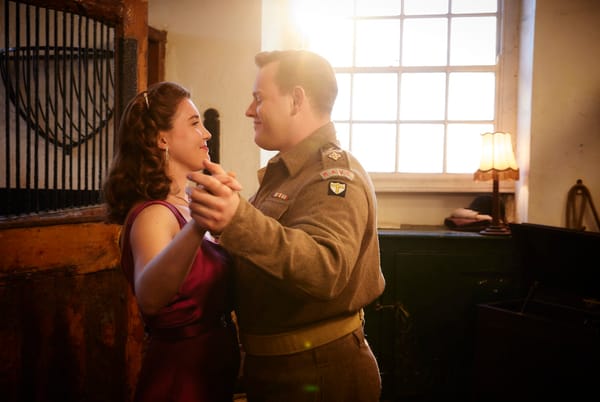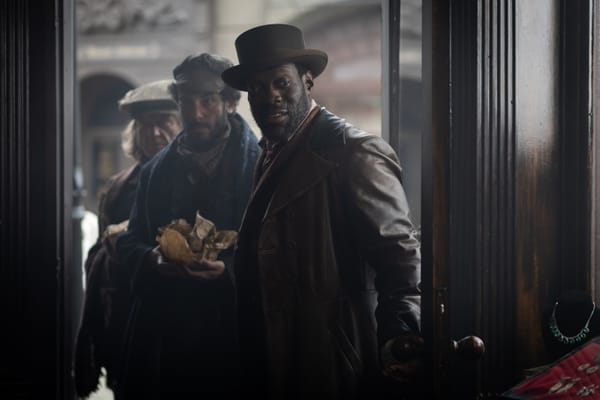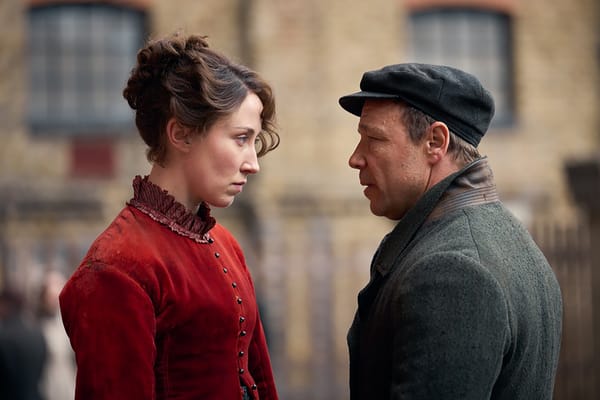
'Bookish's Series Premiere Is "Slightly Foxed"
PBS's newest series, 'Bookish', is an utter delight in its quiet rebellious way.

History, it's said, is written by the winners; they are the ones who choose which narratives to highlight and which to downplay. However, it's not just history that the winners get to write; it's also the definition of norms that history is twisted to support. We are told white men sent us into space because we are not only meant to believe that white men spearhead progress, but that only they define what progress is and carry us forward. The erasure of the contributions of women, those who are LGBTQ+, and people of color is not just white men taking the credit, but a method of demanding that everyone else assume all new ideas will also come from them in the future.
But even with the erasure of stories that do not center the heterosexual white male, there are always signs, if you know how to look for them, of queer culture. Moreover, the sudden push in the last decade to bring those stories forward, even in the face of regimes that would destroy anyone who does not fit the narrow norms the written histories try to dictate, is an act of ongoing rebellion, a refusal to be erased for others' comfort.
This is all to say that while PBS's newest addition to the lineup, Bookish, may not be as sexy or boundary pushing as, say, Heated Rivalry, it is just as rebellious a series in its quiet little way.
It is difficult to recap a mystery deliberately split over two episodes, but unfortunately, that's currently where we are as a society, especially with shows that cross the pond. There are myriad factors driving this, starting with the ongoing globalization of TV, which Netflix is leading. British TV programmers favor three 90-minute episodes. American television prefers a show (especially one that airs and streams weekly) to run for at least six installments to build word-of-mouth viewership, and relies on an advertising model that assumes 45-minute runtimes. Hence, shows like Maigret, Van der Valk, Vienna Blood, and the like being "six-episode three-mystery" seasons.
Bookish was, from the jump, a show that was clearly gunning for American viewership. Produced by Eagle Eye Drama, the company founded by Walter Presents partners Walter Iuzzolino and Jo McGrath, it is only the second major live-action series from the pair that's wholly original and not an English-language remake of one of their hit foreign series.
Bookish was dreamed up and co-written by its star, Mark Gatiss, and is not based on an existing property; however, it resembles many of Eagle Eye's previous offerings, especially the company's first original series, Hotel Portofino, in some key ways.
Bookish looks, from the outside, like a typical mystery-of-the-week series, the kind that British television will run until the original actor either retires or gets bored, only to be replaced with a new lead. But it's so much more than that. It is a story about misfits during a time when people were being forced to conform to strict heteronormative standards. Gatiss' character, Gabriel Book, is not just quietly out to those he loves, including his wife Trottie (Polly Walker). He's cheerfully spectrum, using it as a form of verbal armor; those who come into contact with him either are forced to get on his level or leave the way they came.
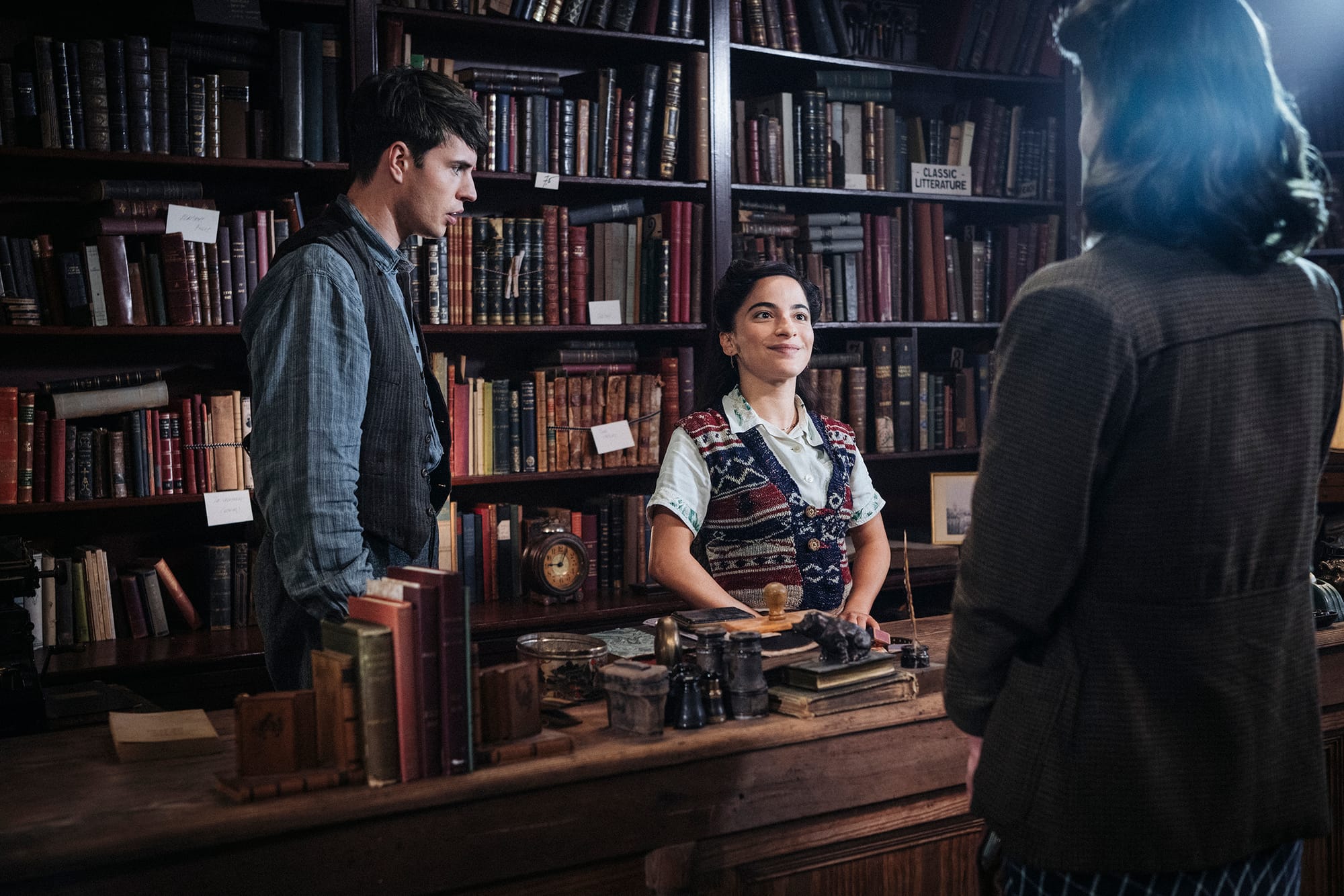
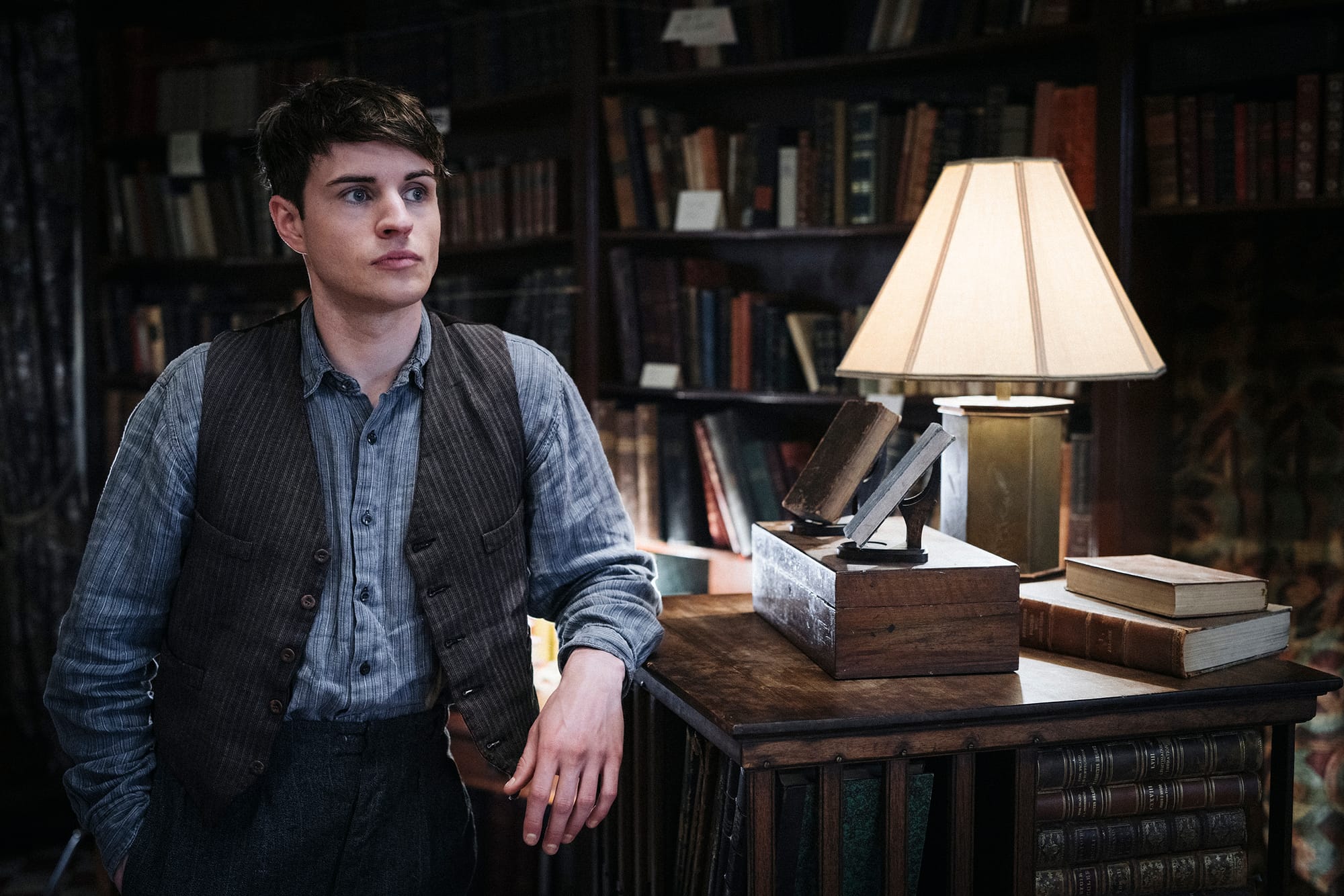
This being the premiere episode, the mystery is more of a sidecar, giving us a reason to meet the whole gang via the perspective of Book's new assistant, Jack, Just Jack (Connor Finch), a very pretty young man who has just been released from pison, and desperately in need of a job and a found family that will accept him. In short order, we meet Inspector Bliss (Elliot Levey), the Scotland Yard detective who, like Poirot's Japp, has long accepted that he has a private detective assisting him, whether he asked for it or not; and his bagman, Sgt. Morris (Blake Harrison), who is still trying to argue about it.
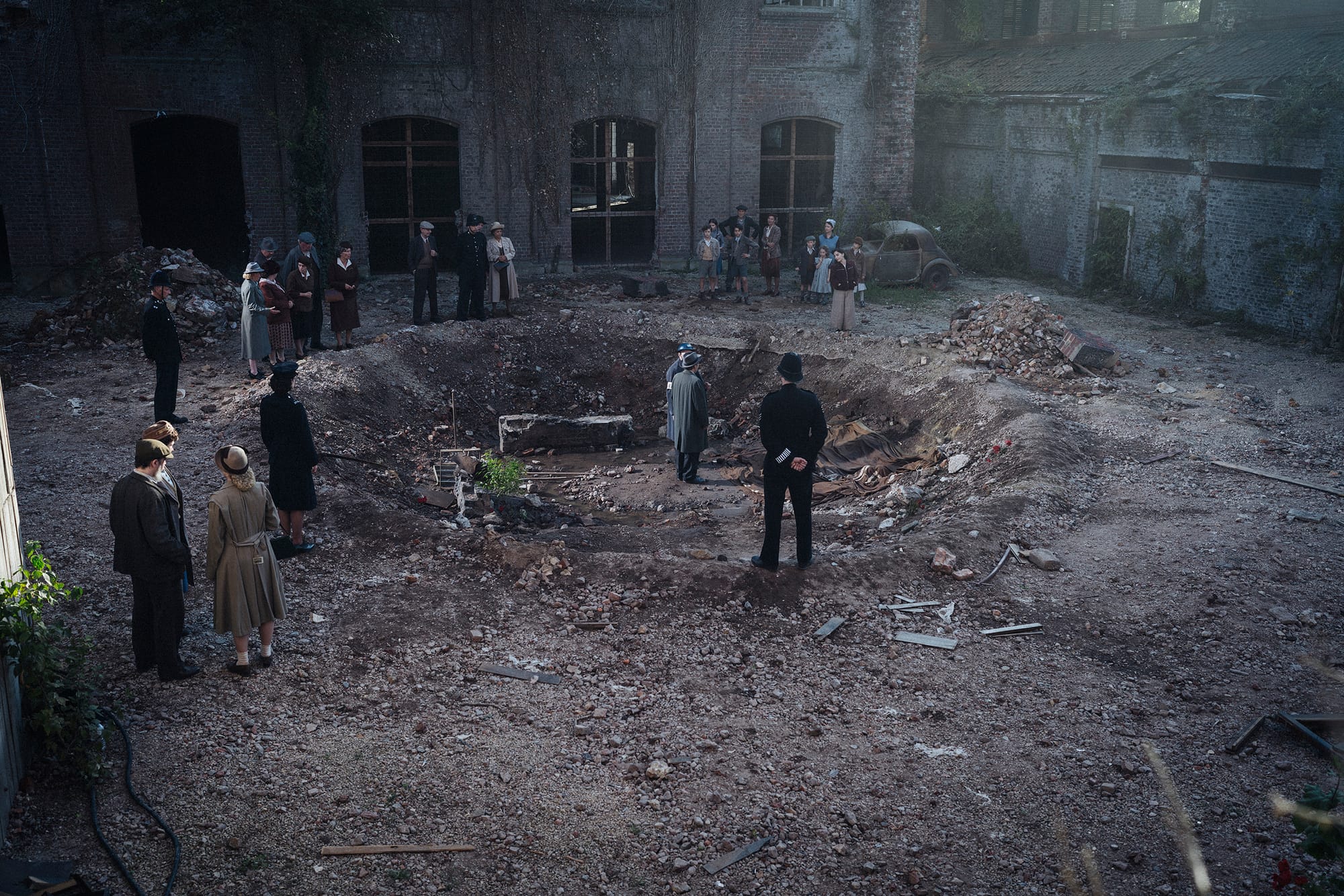
However, this isn't the case of the week; it's just a random history lesson featuring a plague pit uncovered by a former soldier named Baseheart (Gerard Horan), who still does his regular patrols of the bombed-out areas that pockmark London post-Blitz, because he doesn't know how to stop.
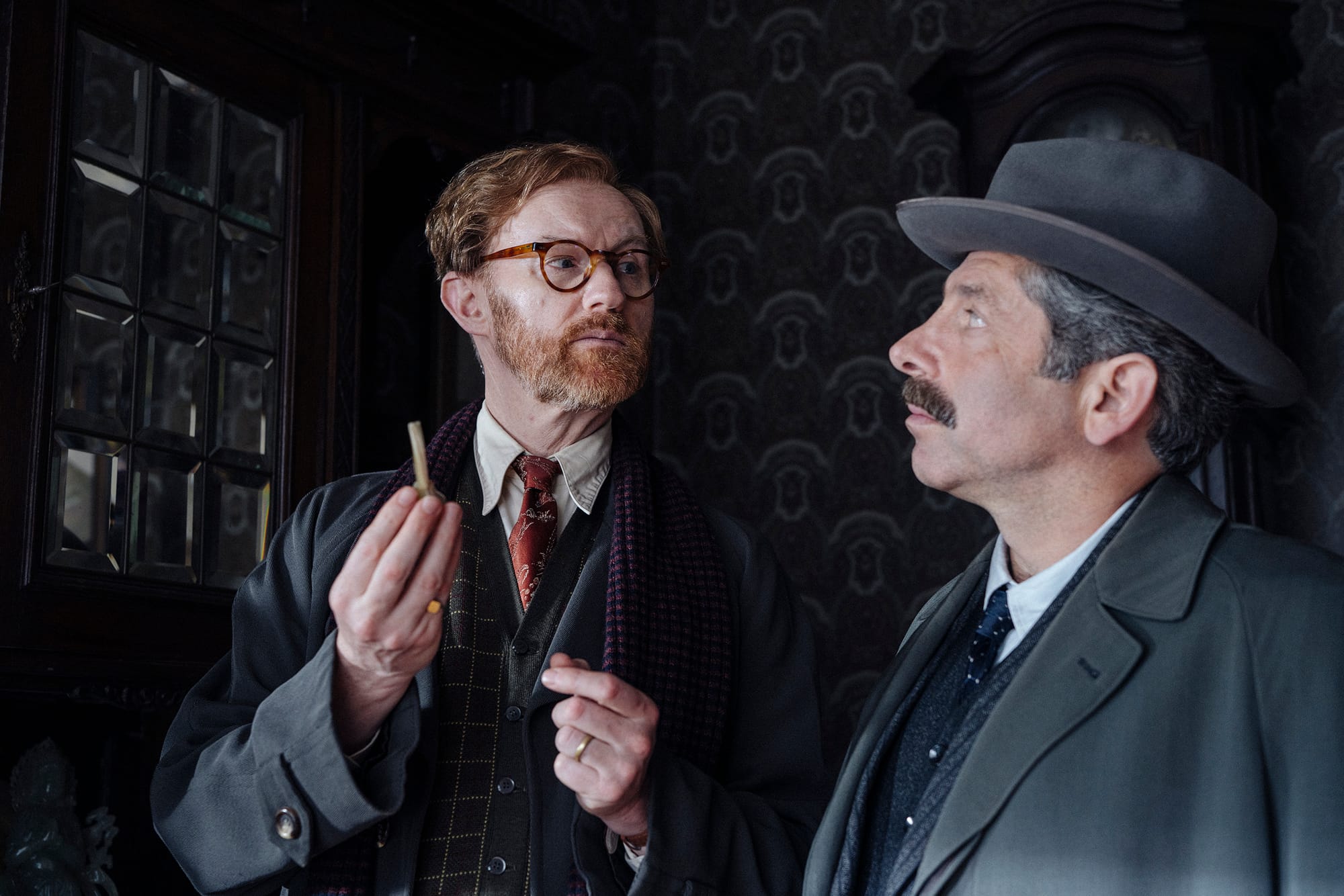
The actual case of the week is the murder of a woman by a former soldier, which we are shown in the cold open. But that's not the body that's found first; instead, it's Mr. Harkup, the chemist, who seems to have committed suicide via prussic acid. Book, of course, thinks not, and brings over Harkup's charwoman, Mrs. Dredge (Rosie Cavaliero), who found the body, for tea, cakes, and gossip until he has the name of Harkup's daughter, Merula (Ella Bruccoleri), and why they're estranged: she ran away with Mickey (Tom Forbes), a war profiteer who her father disliked.
Jack is left to mind the store with Nora (Buket Kömür), whose uncle owns the Turkish restaurant across the way. Merula is not a friendly character; she is angry at being forced to identify her father's body and annoyed by having to sit through questioning. Book trots along to the interrogation, having established with the mortician, Dr. Calder, that one of the plague pit skeletons was far more recent than the others.
Merula is not the horror Dredge made her out to be, and she also seems fairly certain her father did not commit suicide. Yes, Mickey did black market to make ends meet during the war, but he's also painfully nearsighted, so much so that he would have failed any physical. But Harkup had been convinced that Mickey was stealing morphine from the shop and selling it, and nothing Merula could say could convince him otherwise. And just in case you hadn't put two and two together, the end of the episode reveals that Harkup changed his will recently... and Dredge will inherit everything. Of course, she did it.
That's all we'll get for this week's episode, but the series does add a bit more fun twists with the introduction of "D" (Tim McInnerny), Book's old war contact, who he clearly used to spy for, and who was instrumental in finding them Jack and arranging for him to be released to work for Gabriel's shop.
Curiouser and curiouser...
Bookish Season 1 continues with new episodes weekly every Sunday at 10 p.m. ET, on most local PBS stations, the PBS app, and the PBS Masterpiece Prime Video Channel. All six episodes are available to stream for members on PBS Passport. Season 2 is already filming.