Classics Revisited: 'Mansfield Park' (1999) Highlights the Frustrating Nature of the Original Novel

Mansfield Park is Jane Austen’s third novel to be published, and if you’ve swooned over her other books, you may find this one ... difficult. Her contemporary readers didn’t seem particularly bothered by the change of tone. After all, it was still much better than many books produced by her contemporaries, and it does contain some genuine wit and zingers. “Let other pens dwell on guilt and misery,” one of Austen’s most famous lines, comes from Mansfield Park. Is the book an indictment of British Imperialism and slavery? Is it inspired by the Evangelical movement (the Anglican Church reform of the period)?
Why do we find the book challenging and intriguing, its heroine maddening, and what compels us to return to the text to decode Mansfield Park’s secrets? The heroine, Fanny Price, lacks the wit and liveliness of Elizabeth Bennet or the steadfast courage of Elinor Dashwood. The clergyman hero falls in love with someone else and dithers. Fanny has been interpreted as a fierce defender of morals in a hostile amoral environment or a complete wimp. Take your pick. So while I applaud director/screenwriter Patricia Rozema for her boldness, the movie doesn’t work. And sadly, on a scale of one to ten as to whether it represents Austen, I think it comes in at about a three.
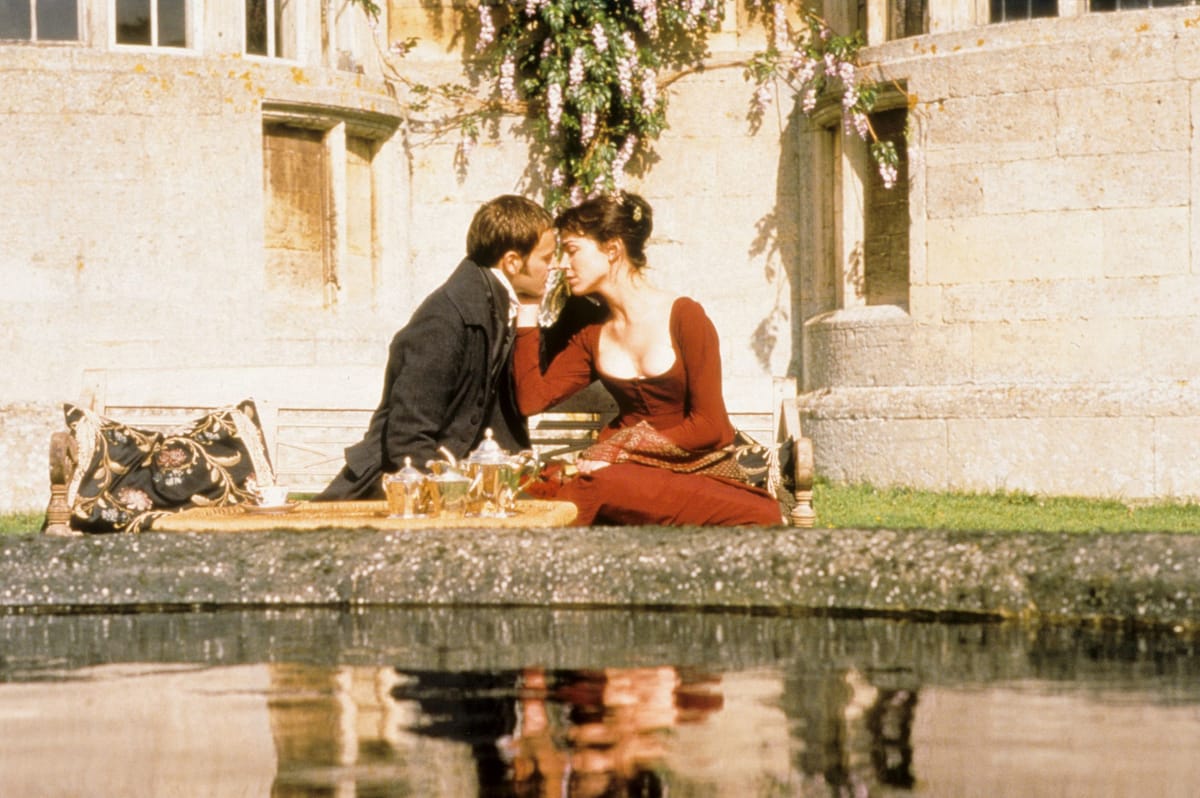
Played by Frances O'Connor (Mr. Selfridge), Fanny Price, sent to live with her relatives in the grandeur of Mansfield Park, is never entirely accepted as part of the family and lives in emotional and social isolation. She bonds with her cousin Edmund but is primarily an observer whose presence is ignored or exploited. And yes, there is something wrong with the Bertrams––they live in a vast, half-built house. They barely socialize, although the eldest daughter Maria has become engaged to a neighbor, the dullard Mr. Rushmore. When worldly brother-sister duo of Mary and Henry Crawford invade, the trouble really starts. It begins with some amateur theatricals and the performance of a shocking play, Lovers Vows.