Dated or Delightful? 'The Good Life'

In this installment of Dated or Delightful, we travel all the way back to 1975 to see if a little sitcom about self-sufficiency in the suburbs can still be funny. Yes, over forty years ago the BBC’s The Good Life debuted in the UK and remained popular throughout the decades even earning it the honor of 9th best British sitcom of all time in a 2004 BBC poll.
If you happened to catch this show on PBS in the early 80’s (as I did) you probably remember it as Good Neighbors. Apparently a short lived American sitcom called The Good Life starring Larry Hagman and Donna Mills debuted in the early 70’s. Clearly someone in charge thought audiences might be confused by a series with an identical title despite that fact that the US show aired only half a season and most people likely never even saw it anyhow.
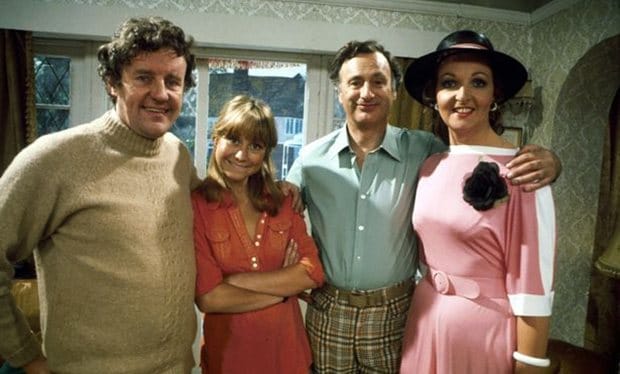
The more enduring UK series lasted four years and followed the earnest if not always successful efforts of disillusioned draftsman and suburban dweller Tom Good (Richard Briers) and his wife Barbara (Felicity Kendal) as they chucked it all in for a simple existence on their own terms. The Good Life was, in part, inspired by an interest in green issues and a back-to-the-land movement of the time.
Simultaneously it satirized the “keeping up with the Joneses” middle class mentality particularly rampant in the suburbs. Next door neighbors Jerry and Margo Leadbetter (Paul Eddington and Penelope Keith) represented these values with humor and aplomb.
I recently watched the entire first series and half of the second and found it overall delightful with a few minor reservations.
Here’s why:
Self-sufficiency is still a relevant topic today. Bartering, buying locally from farmers’ markets, alternative energy sources, and repurposing are concepts we encounter every day. And which of us hasn’t found the idea of leaving the rat race to take charge of our own destiny appealing from time to time? Watching someone else jump in with both feet and commit completely to living within their means can be vicariously rewarding. It’s also a cautionary tale about what turning 40 can do to an idealistic bloke.