Dated or Delightful? 'Rumpole of the Bailey'

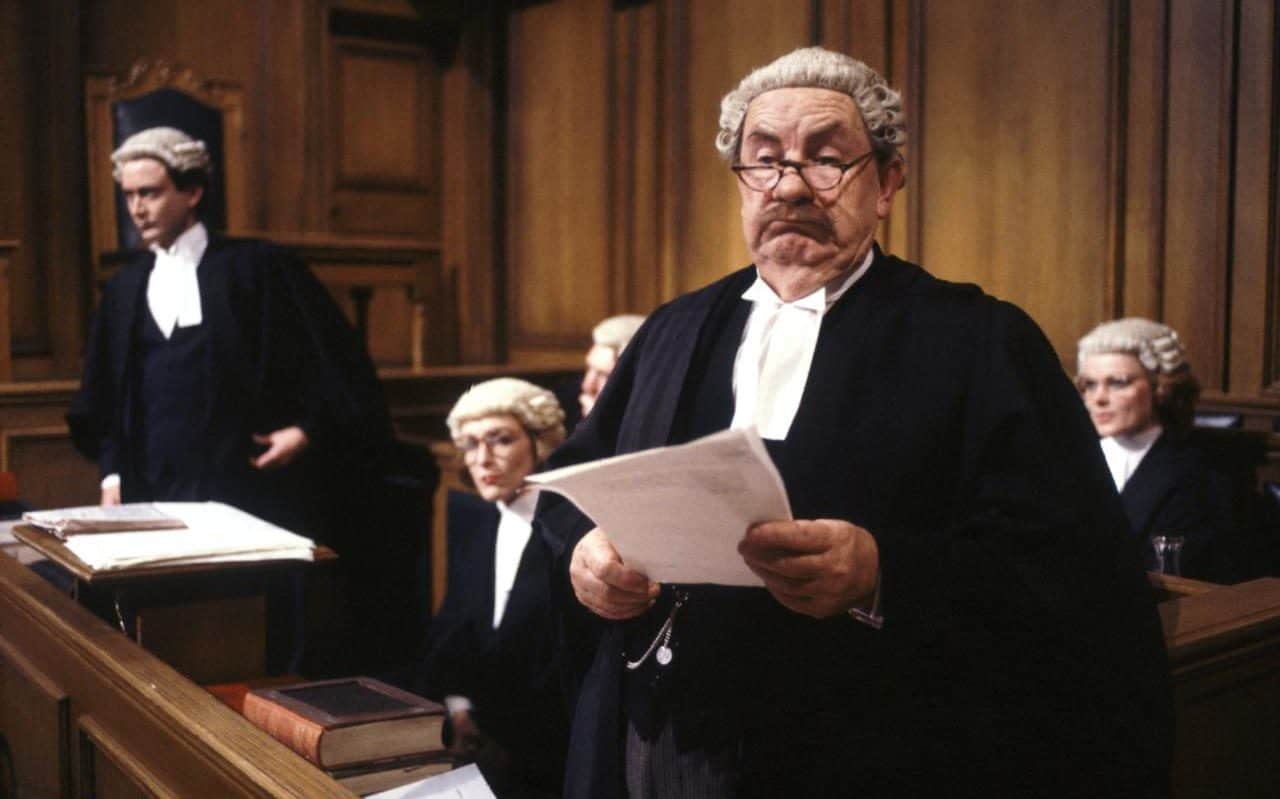
In this installment of Dated or Delightful, we travel back to the late 70’s to discover if an ITV courtroom drama about a binge drinking, poetry loving, criminal defending barrister still stands up as an entertaining example of telly in 2016. May I present my evidence for the case of Rumpole of the Bailey?
First off, I had quite the wrong impression of what this show really was. I had always assumed it was a period piece set a couple of centuries or so ago –the wigs, the blustery poetry, even the title shouted old timey costume production. Not that there’s anything wrong with that - I found Garrow’s Law to be a solid historical legal program, after all.
Nevertheless, when I actually set upon the task of watching this almost four decades old series, I was in for a surprise. Rumpole was a much more modern day story than I had imagined while still brimming with British justice system traditions which made this courtroom drama enthusiast quite an entertained viewer.
Leo McKern (who happens to be Australian, not the quintessentially English thespian I assumed he was) debuted as Horace Rumpole in 1978. Created by real-life barrister John Mortimer, the show ran for seven series over a fourteen year span. The first series was sort of odd in that each episode was supposed to have taken place in a different year starting in 1967 and catching up by the end to 1977. Subsequent seasons did not follow that pattern.
I found the character of Rumpole to be larger than life and a force of nature. This workaholic lawyer lives for criminal cases and never pleads guilty. He often cites the success of his defense effort as a young solitary barrister in the Penge Bungalow Murders case as the pinnacle of his career. A self-described "Old Bailey hack", Rumpole eschews the idea of taking silk, being Head of Chambers or sitting on the “circus” bench. He’s seen as an eccentric rebel and an annoyance by his colleagues and the judges he appears before. But they begrudgingly admit he is brilliant at his job and, despite what he would want others to think, he really cares about justice.