"I Do Like to Be Beside the Seaside": The British Vacation Tradition

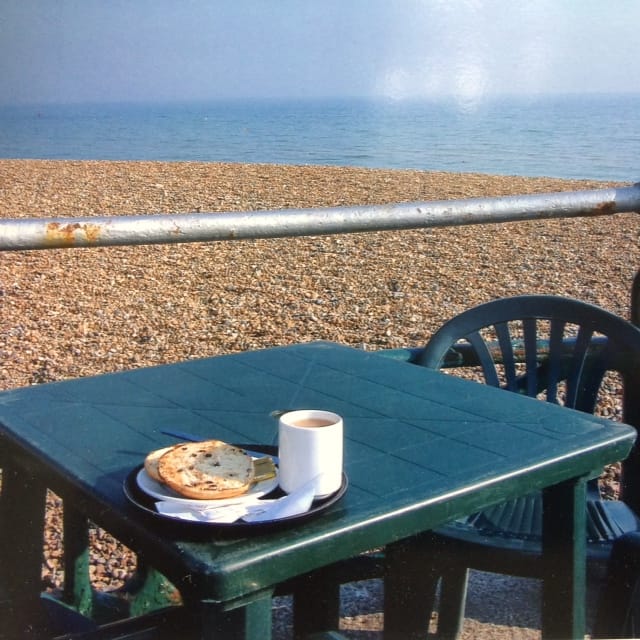
Oh! I do like to be beside the seaside!
I do like to be beside the sea!
Oh I do like to stroll along the Prom, Prom, Prom!
Where the brass bands play, “Tiddely-om-pom-pom!”
John A. Glover-Kind, 1907. See more.
As the old music-hall song says, Brits do like to be beside the sea and have been delighting in the pleasures to be had there for over two hundred years.
It all started, more or less, when a Dr. Russell of Brighton came up with the theory that sea bathing (and drinking) cured just about everything, in the middle of the 18th century. Georgian upper-class society, who already knew the advantages of combining pleasure and cures (in spa towns like Bath, for instance), took to it like, well, ducks to water.
The sleepy little village of Brighthelmstone on the Sussex coast was transformed into one of Britain’s most fashionable resorts, Brighton. The Prince Regent (later King George IV) took a fancy to the place and built his ridiculously exotic Royal Pavilion there.

It became England’s major party town and it’s no wonder that Lydia Bennett in Pride & Prejudice longed to go there. And if you’ve ever wondered why the regiment was going to Brighton, it was because the town was considered at risk for a French invasion during the Napoleonic Wars. Jane Austen herself preferred the more sedate Weymouth or Lyme Regis to Brighton (Lydia, as you may remember, ran off with Wickham from Brighton, and Austen disliked the Prince Regent.) Her unfinished novel Sanditon satirizes the whole health tourism industry of such resorts.
By the time servant William Tayler visited Brighton with his employers in 1837, the town was at the height of its popularity but it fell out of fashion during Victoria’s reign. In his diary, Tayler gives us an idea of the entertainments that the town provided to its visitors, as well as his enjoyment of the sea which he was visiting for the first time. He started his diary to improve his writing, and his idiosyncratic spelling may reflect his country accent. He was fortunate enough to have a lot of leisure time and could arrange his work hours to enjoy himself.
I go to the sea side two or three times a day and amuses myself by seeing the pleasure boats or seeing the fishermen come in with their vessils of fish, or sometimes I stand and watch the large waves jump over the small ones….
Went out this evening, had a peep into a piece of machenry which showed how the moon passed round the sun and what cawsed the eclipses to take place. In another part of the thing, I saw a spider through a very powerfull telescope which made it apear as large as a lobster. … I saw all this for the low charge of one penny.
His diary also includes a description of the famous bathing huts, built to preserve women’s modesty, and in use until the late 19th century when swimming suits were commercially available and mixed bathing became acceptable.
There are numbers of old wimen have little wooden houses on wheeles, and into these houses people goe that want to bathe, and then the house is pushed into the water and when the person has undressed, they get into the water and bathe, and then gets into the wooden house again and dress themselves, then the house is drawn on shore again.
The bathing huts were a rich source of amusement for satirical cartoonists.

A major change came to the seaside resort industry later in the nineteenth century with the advent of the railway, and previously modest resorts now boomed, becoming affordable to ordinary people. The health industry was mostly abandoned, and now it was all about entertainment. In the north of England, well into the twentieth century whole communities, including the mill workers of the great northern towns, spent their one week of vacation at the beach, or came in for day trips on Bank Holidays.
Blackpool is the best known and most spectacular seaside town of the north—in 1879, electricity was installed in the town and a railway line was opened in 1885. The town gained an opera house in 1889 and the Tower, inspired by the Eiffel Tower, opened in 1894, giving the town its distinctive skyline.
This video, which includes footage from the early twentieth century, shows some of the entertainment available and the crowds enjoying their holiday.