King Charles III and the Second Elizabethan Age

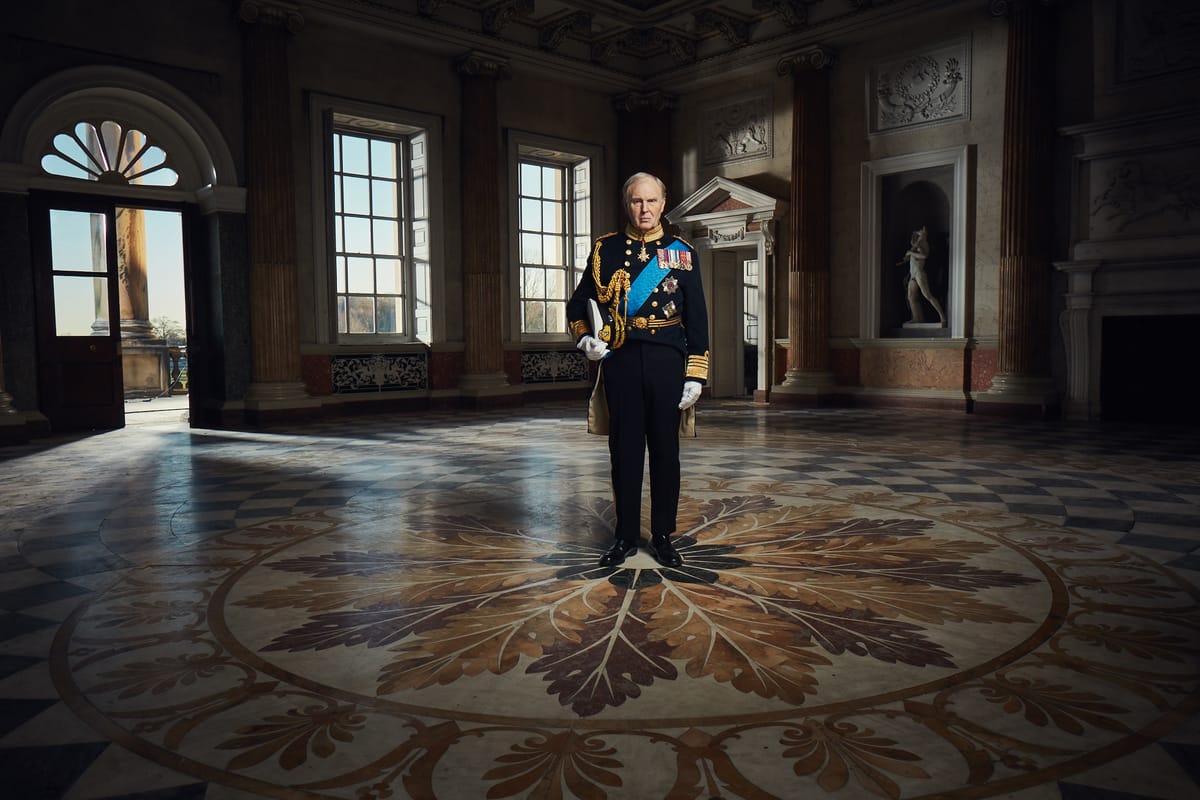
King Charles III airs this weekend on Masterpiece, a Shakepearan style historical drama about history that hasn't actually happened yet. We reflect on the end of the second Elizabethan Age and the anxiety about it that has brought about such a drama before its time.
Just a couple of weeks ago, on April 21st, Elizabeth Alexandra Mary turned 91 years old. On June 2nd, just a few weeks from now, we will celebrate the 64th year since her coronation as Queen of the United Kingdom, Canada, Australia, and New Zealand. In between these milestones, her husband, Prince Philip, announced that he would begin a planned retirement from royal duties. When someone said to the 96-year-old they were sorry to see him stand down, he noted that at this point he can hardly stand up.
The average life expectancy, as modern medicine becomes ever more sophisicated, has gone from the age of 40 in the 1800s to 50 for a woman in 1900 to 83 in the current century. Elizabeth's father, King George VI, lived to age 57, and only reigned a couple of decades of his life. This is true for the other British monarchs of the 1900s as well, all of whom reigned for 10-25 years apiece (skipping Edward VIII who abdicated and doesn't count). Elizabeth is the longest lived monarch in British history, the longest reining Queen Regent in the world, as well as the world's oldest reigning monarch and the longest-serving current head of state. David Bowie, who passed last year, was five years old when she became Queen. George Michael was born, lived and died never knowing any anthem but "God Save The Queen" and that Queen was Elizabeth. She has, at this point, lived so long that those who were of-age adults and remember the protocols of what to do when a monarch dies and the crown is passed on are all pushing 100. If she keeps it up, she may outlive them too.

But there are only two certainities in life - death and taxes - even if the Crown only worries about one. A recent Guardian article, discussing the plans that are in place for her funeral, said officials were estimating the Queen has about four years or so left, suggesting that the Palace does not expect her to make it much past 2020. Even if she, like the Queen Mother, makes it to 101, that only gives her until 2027. Sometime in the next decade, the crown will pass to Charles.
When she does go, history books will look back at this period that covers the post-WWII technology boom through the end of the 2010s and call it "The Second Elizabethan Era". That sounds like a period of granduer, but sadly not. The first Elizabethan Age, under Elizabeth I, was a "golden age" of British rennaissance, one that gave us Shakepeare, the Protestant reformation, victory over Spain, international expansion and economic prosperty. The Second Elizabethan Age, in comparison, has been a slow but steady dismantling of the once-great empire. Under her reign, no less than 45 countries gained their independence - compared to 14 that did so before her ascension. The economic stability of the UK has faltered several times in the last 60 years, including deep recessions in the 1970s and 1980s, as well as the great crash of 2008, from which parts of Europe still haven't full recovered. Depending on how much longer she serves, she'll also rule over the UK's withdrawal from the European Union, and perhaps even the final blows of Scottish and Irish independence as part of the fallout from Brexit. And though the next generation of Windsors that have followed are doing their best to repair the damage done to the monarchy's reputation by Charles and Diana's divorce, "Bill and Cathy Cambridge" as fans call them, still face waves and waves of anti-royalist sentiment.