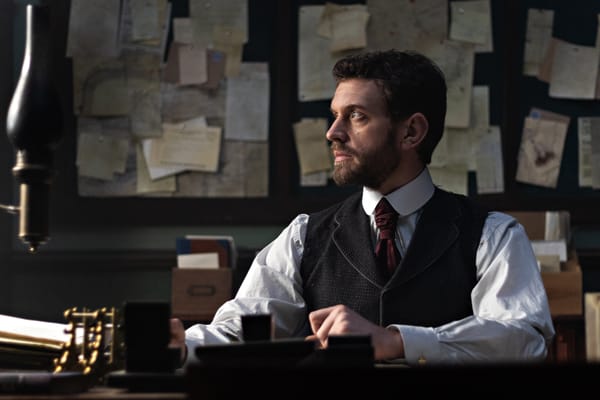
'Nuremberg' Is the Moderate Position
'Nuremberg's sleeper hit status is happening for a reason. It's a film that simply should not be missed by anyone living through 2026.

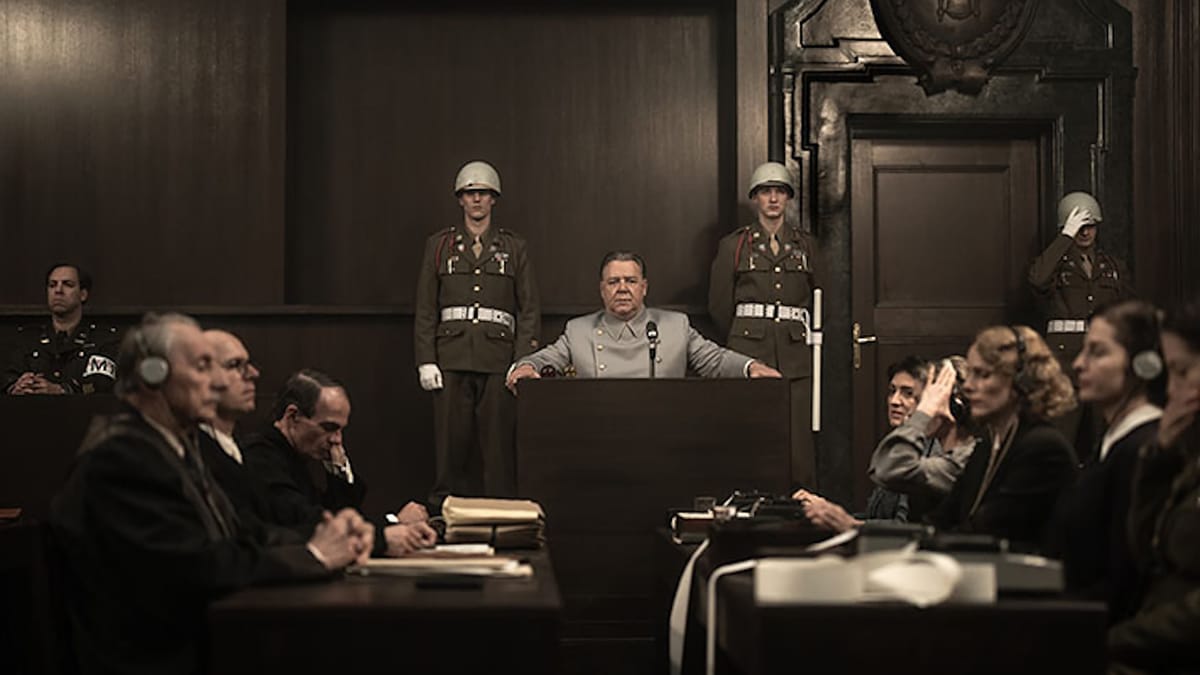
Though we accept today the International Criminal Court and the Hague as a given, less than a century ago, the concept was fairly radical. Their creation drives the would-be awards contender, Nuremberg, which, unfortunately, has been marketed as an “American psychological thriller historical drama.” In truth, the film is a perceptive study of a group of judicial and military men who put their careers on the line to invent and act out an evolving court scenario whose ethical soundness would seem so correct, so rooted in agreed-upon just natural human behavior, that its legality would be taken as self-evident before a vast public.
The problem of what to do about Holocaust criminals was something of a crisis point in the aftermath of World War II. In the late 1940s, there was no international set of laws accepted by a large majority of individual nations. Framed as an emblematic story of a widely experienced 20th-century world war of interest to people across the globe, the film focuses most of its riveting screen time on two individuals who did not participate in deciding the terms of the judicial trial.
The core compelling defendant, Hermann Goering (captured brilliantly by Russell Crowe), had concocted and supplied the means by which millions of guiltless people were abducted by state-sanctioned military, shipped to where they could be easily exterminated, treated barbarically, or experimented on like animals. He’s seen primarily through the eyes of Douglas M. Kelley (Rami Malek), a respected physician of human behavior, hired to examine Goring to see if he was fit to stand trial.
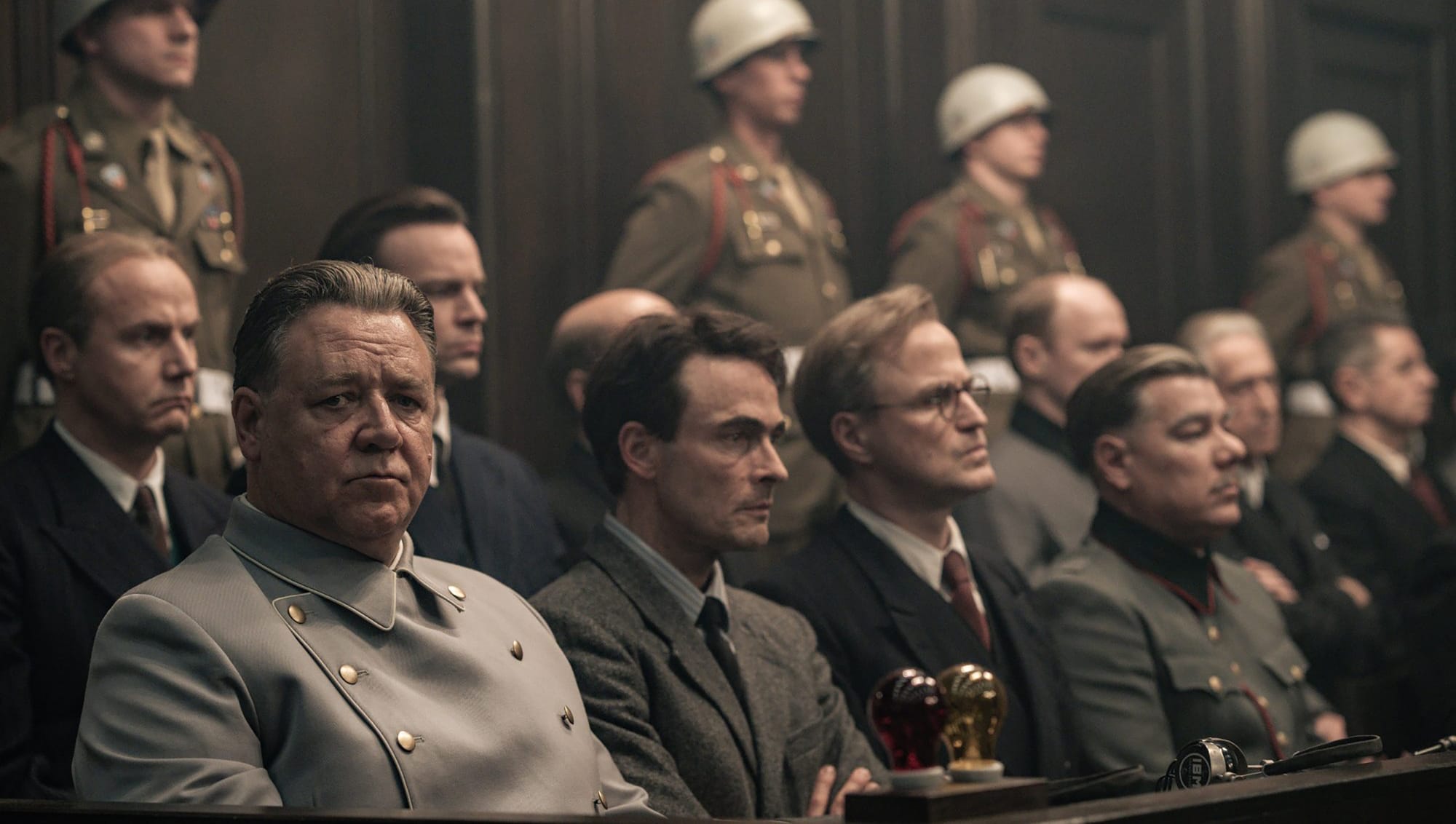
The script’s main source is the Jack El-Hai nonfiction book The Nazi and the Psychiatrist (published in 2013), and while the film was obviously made as a troubling analogy to an ongoing, immediate situation in the U.S., its explicit (voiced) emphasis is on the personalities of these two people.
Kelly, the unbiased man of science, says he has come to try to understand the nature of evil in this man. However, the film belongs to Crowe, and his arrogant, disdainful, self-assured high-status man. He has the pride of an aristocratic hero as he apparently obsessively and triumphantly thinks about how he will evade the humiliation of a hanging by killing himself first. He boasts to Dr. Kelley, “No man has ever beaten me.”
But of course, no man is truly evil (at least not in films), and it will surprise no one that Goering is also portrayed as someone whose vulnerabilities and worries about caring for his wife and daughter are meant to elicit the viewer’s sympathy. Likewise, Kelley’s good-hearted benevolence leads him to sometimes act as Goering’s helpful friend, not just to gain his trust.
However, the film gets away with it by avoiding most of the usual clichés and refusing to ratchet up tension through short scenes in a melodramatic story chock-a-block with climaxes. The nuanced indirect conversation (as in life) gives the viewer time to believe and get immersed in what’s happening. The “slow food” nature of these scenes between Kelley and Goering allows them to run long and let the viewer sit with inconclusive answers.
It also does not end with Goering’s suicide the night before his execution, either. Instead, the film’s final scenes focus on Kelley’s psychological difficulties after the incident and his attempts to resume his life. He has been changed by the encounter and experience – he has watched (with us) distressing footage of the prisoners as they were released from the concentration camps, the horrifying heaps of corpses.
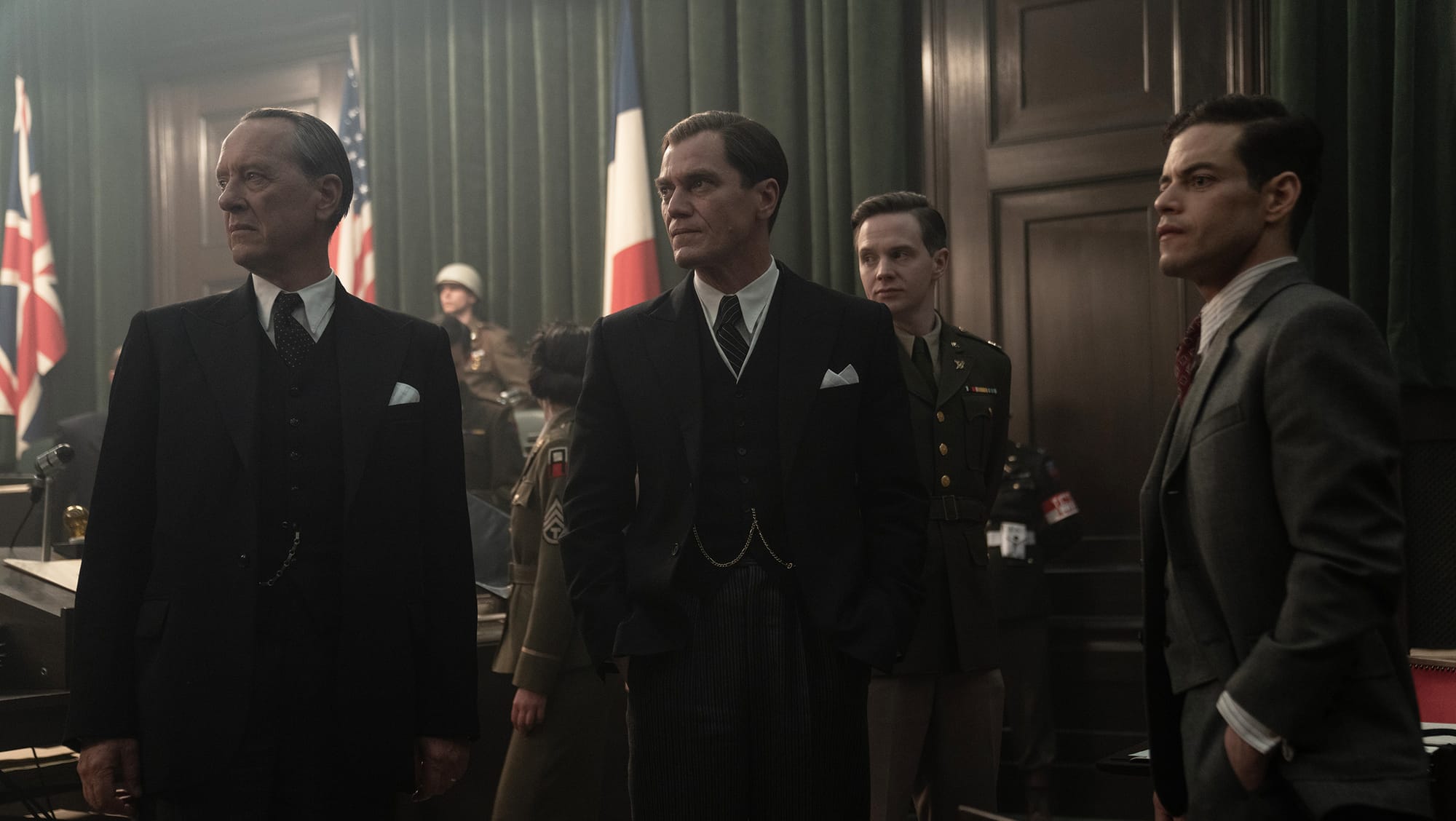
Yet, neither he nor the other leading Allied figures (notably Michael Shannon as a thoughtful version of Chief Prosecutor and eventual SCOTUS judge, Robert H. Jackson) stop to interrogate the situation. Instead, the emphasis is on individual trauma, highlighted by glimpses at how Goering’s fellow inmates behave in passing. Andreas Piet Scumann steals every scene as a crazed Rudolph Hess; meanwhile, Robert Ley (Tom Keune) takes his own life when declared competent to stand trial.
In the end, the film can’t quite bring itself to stick to the quiet humdrum of history. In what feels like an unnecessary twist, Kelley is goaded into telling a journalist that Goering denies he knew about “the Final Solution.” She publishes this, and he is summarily fired. The point is that Kelley is too traumatized to do the job anymore; it is left up to the cool, seemingly unemotional Sir Maxwell Fyfe (Richard E. Grant, quietly inimitable) to pry a confession from Goering that he would have stayed the course, no matter the consequences.
The film begins and ends with a reminder that Winston Churchill and other European leaders wanted a summary execution, while Stalin and the Eastern bloc he controlled demanded show trials. Some of the characters worry about what the jury verdict will be, how the courtroom audience will respond, and how newspapers will report it, but in the end, the Nuremberg trials, The Hague, and the modern system of global justice we have today were the moderate position. It may not be flashy enough for the awards scene, but Nuremberg is the kind of film that becomes a sleeper hit and an eventual classic.
Nuremberg is still in theaters in the U.S. and is available for digital streaming on all platforms. It will eventually be available streaming for subscribers via Prime Video.